Welcome to my EdTech blog!

Category: Uncategorised

Coding and Computational Thinking

Computational Thinking and Problem Solving

Computational thinking can be a great way to help learners become better problem solvers. Through computational thinking, students are required to look at problems as a series of tasks, turning the problem from one big thing into a series of smaller and more manageable steps. This is the algorithm they are creating through decomposition. Students using computational thinking can also become better at pattern recognition; understanding that new problems may be related to problems they have already solved. These skills can then be applied to a variety of problems, making students better problem solvers. It can also help students feel more prepared to tackle problems, especially once they are able to use decomposition and pattern recognition. By using these, students may feel less stressed about big problems, looking at them properly as a series of smaller problems rather than one big issue. 

Photo by olia danilevich: https://www.pexels.com/photo/man-sitting-in-front-of-three-computers-4974915/

Non-Math Related Opportunities for Coding

As I mentioned, computational thinking can be applied to problem-solving as a whole, making it easily applicable to other subjects, from humanities to sciences. Many problems contain steps, making computational thinking a great resource aide. Coding in schools is generally thought of with regards to mathematics, but in reality it could be used for a variety of subjects. Coding can be used for humanities, creating a story and using coding to animate it. Programs such as Scratch allow learners to create simple animations, which can be great for storytelling. Students can create their character, giving commands that cause them to move along with the story. Voice over can also be added using this program, allowing students to narrate their story if their grade level allows. You can also use this for science, mimicking labs. Students can use coding to run a program that shows what they did for their labs, giving an almost alternative to the usual written lab reports. While coding does generally involve math, it does not have to be the main focus, allowing coding to be presented to children in a way that has them focus on other subjects without even realizing that they are doing math!
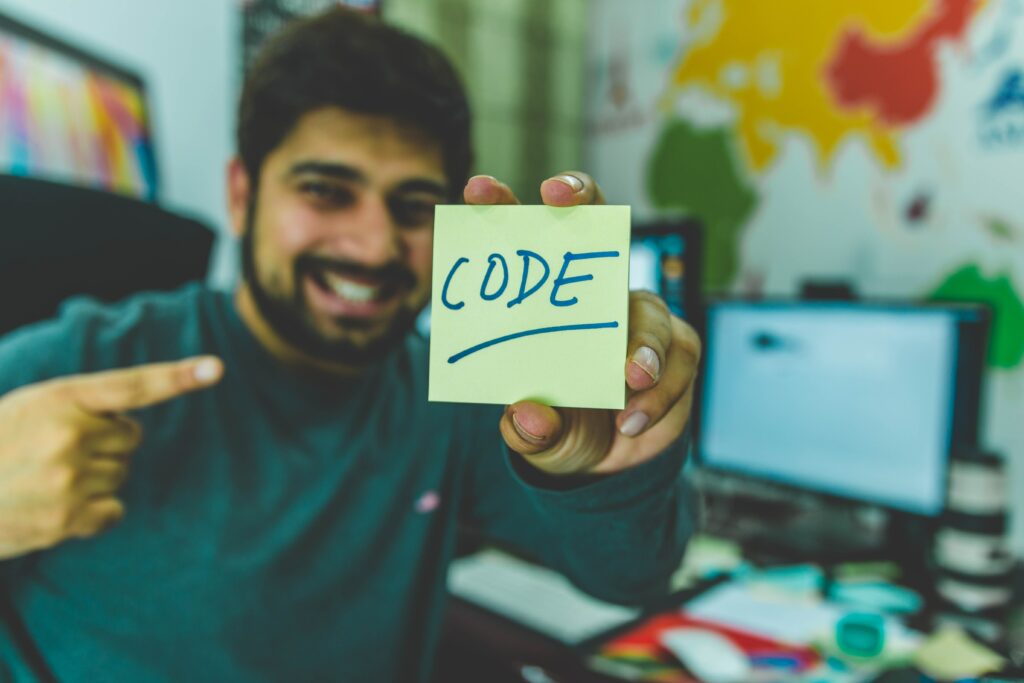
Photo by hitesh choudhary: https://www.pexels.com/photo/man-in-grey-sweater-holding-yellow-sticky-note-879109/

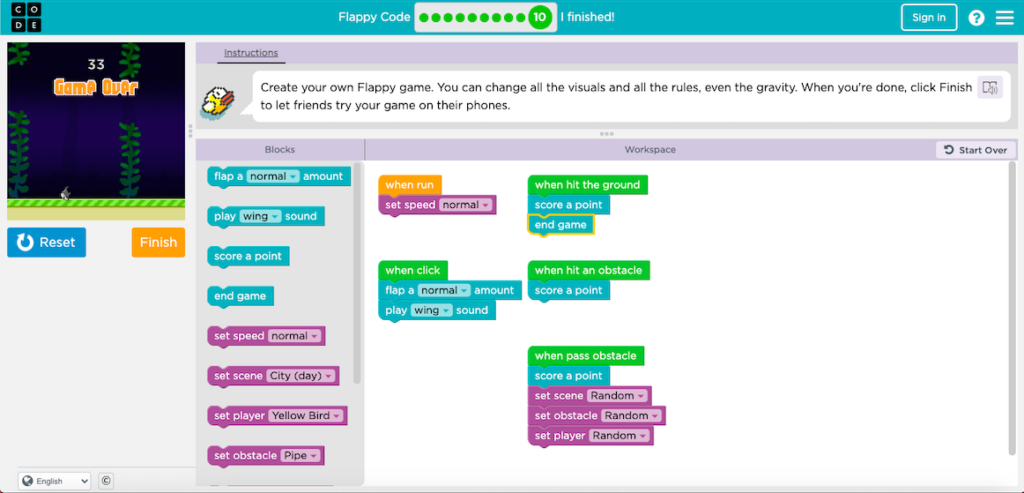
Sample Scratch Project – Flappy Bird
Learning to Make Granny Squares

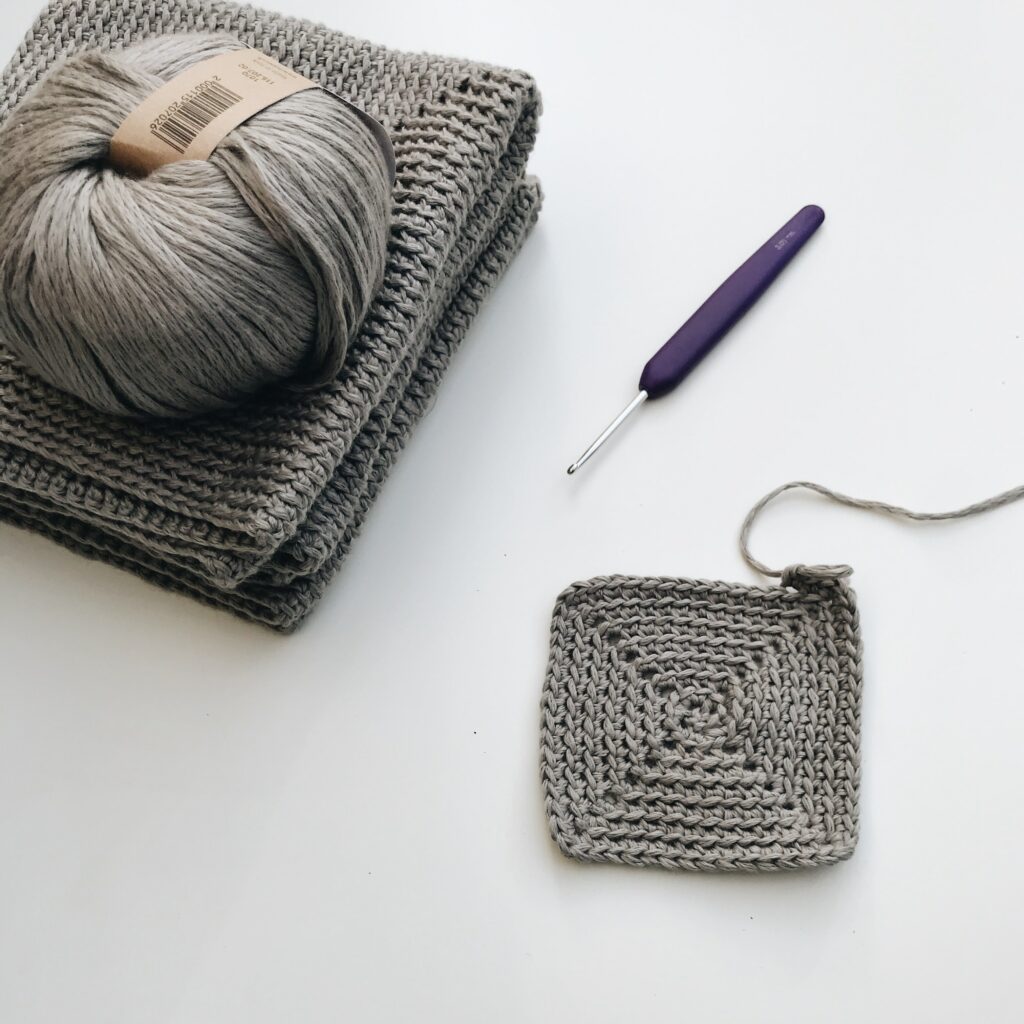
I was sick for the past week, which gave me a lot of time to practice my crocheting. I was finally able to figure out how to make granny squares, and made a couple. I used my 4.0mm crochet hook and thin yarn, creating my slip knot and getting started. I realized that it may be easier to create the magic circle if I started with a longer chain, so rather than chaining 4 I chained 8. After this, I slipped the hook through my first chain and pulled the yarn through, creating my circle! I was then able to realize that each side of my square should be made of 3 double crochets. To start this first round, I chained three, then did two double crochets. This created the first side of my square. To get to the next side of my square, I chained 3 to create the corner. Once I had my corner, I did three double crochets to create the next side. I then repeated my corner and created the last two sides for this round. My first granny square was not perfect, as I got lost in the rounds and was not able to finish each round before starting the next one, creating a bit of a spiral. For my next granny square, however, I realized I needed to end each round before beginning the next. To do this, I would slip the hook through the first loop on the first side of the round after finishing the last side. Then, I would loop the yarn onto the hook and pull it through. I continued this, making about 4 rounds for the granny square. Once I reached the end, I would end the round as usual before cutting the yarn, chaining one more and pulling the yarn through to close the square. I repeated these steps for each of my granny squares. This progress was great for me, as I am now one skill closer to being able to complete the dog sweater I am working towards!

Photo by rocknwool on Unsplash

Week 1 Reflection

Hey, welcome to my blog! I am looking forward to starting my inquiry and posting weekly. Setting up the blog was a bit of a challenge, with the website being a bit confusing and not working for the first few tries. I think that this was likely due to the amount of people using it at once, and the website seems to be working perfectly now. Now that it has been resolved I look forward to customizing my blog and updating weekly!

© 2026 EDCI 336 Inquiry

Theme by Anders NorenUp ↑